
In an era where music culture moves at speed, The Slackers represent an unwavering commitment to craft built through time.
Formed in New York City in 1991 the band has spent over three decades refining a sound rooted in Jamaican musical traditions while absorbing the textures of American soul, jazz and rock. From the outset they developed a musical vocabulary that leaned toward slow and deep rocksteady and reggae rather than the high-tempo energy of the 1990s ska revival, and rather than orbiting the mainstream The Slackers cultivated their own devoted fanbase through years of tireless touring and a catalogue that never stops evolving.
The enduring presence of The Slackers speaks to a particular way of working, with a career defined by consistency instead of reinvention with each release adding another layer to their deep catalogue. Having built an early classic run of albums in the 1990s based on ska and rocksteady, their early 2000s releases Wasted Days and Close My Eyes showed deeper songwriting with a broad emotional range before Peculiar sharpened their political edge. Even now in the 2020s, their approach seems to have accelerated into a rich period with 2 full-length albums, archival recordings, the terrific 2025 EP Money Is King and even a Dub Classics album reworking their best material through the lens of Lee “Scratch” Perry and Mad Professor. All of this alongside a relentless touring schedule that has kept their international fanbase happy for decades.
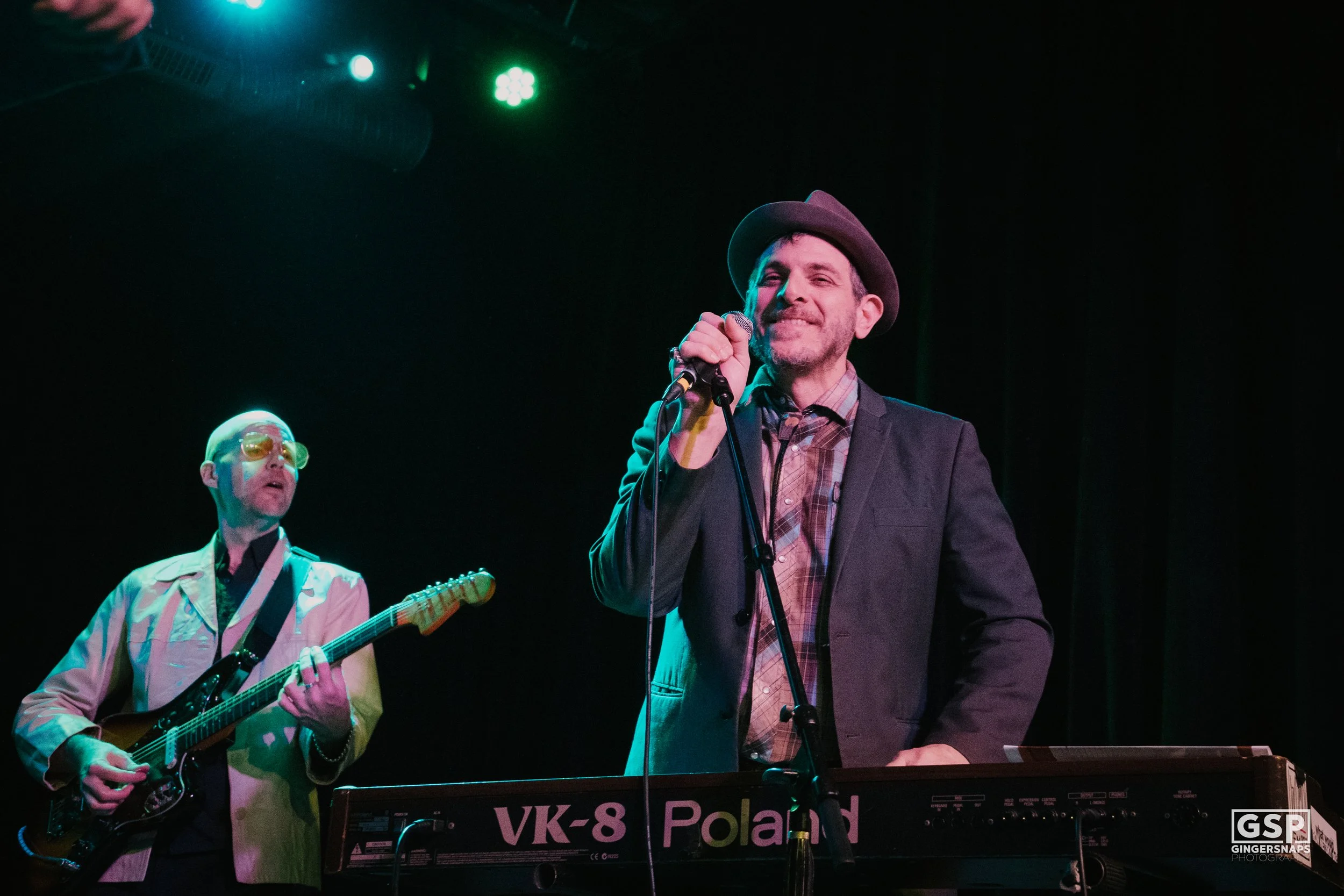
We caught up with The Slackers’ saxophonist Dave Hillyard to find out how the band have been able to sustain such an incredible output, both in the studio and on stage, for so, so long:
Hi Dave, thanks for speaking with us today! What do you think is the secret to The Slackers longevity?
I'm not exactly sure. Sometimes you don't want to analyse how things happened too closely cause maybe the future will prove you wrong. I've been playing in the band since 1993. I just sort of fell into it. I wasn't planning on it being the central focus of my life. That being said, I guess I was seduced by the original songs Vic was writing. And the joy we have when we are playing together. That is something no one can take away. It's a powerful thing. To have such a connection. For me, it's something worth cherishing and wanting to continue.
The band seems to be speeding up rather than slowing down the past few years, what’s driving this recent creative burst?
Well, we have been steadily putting out new material. And doing a steady series of reissues. Part of it is opportunity, that we once again have a record label, Pirates Press, that is willing to put out the new stuff that we dream up. Since we stopped working with Hellcat back in 2010, we went through a several year period of not having a label. So we have a home for our music which helps immensely.
We are lucky that as a band we have Vic who writes a ton and we have 4 other guys who can write as well. So we always have a lot of material. We currently have half a dozen tunes we haven't released from previous sessions over the last 2 years. Then we just recorded 9 songs in Portland this June. It was a cool session at Hallowed Halls studios in Portland. For me, there is a rush of hearing a new tune and following the process of making it from a sketch of an idea into a reality. Creating new things is something that no one can take away from you.
Your touring schedule is insane, has the band ever taken a significant break?
I don't know if it's insane. Hahahaha! Most people with day jobs work around 250 something days a year. The Slackers do around 90 gigs a year. We have been doing this since 1997. Since Red Light came out we have spent a good portion of the year on tour.
Since 2016, we make sure to have around 6 months of the year when we are not on a Slackers tour. That we set aside time to be home and recharge our batteries. Currently, we are on a 2 month break until September when we go to Brazil. So 90 gigs plus maybe around 20 travel days and 15 studio / rehearsal days. So let's say 125 days a year I'm doing in person appearances with The Slackers.
The other part though where it seems never ending is the business stuff that is behind everything. Social media. Tour logistics. Finding the gigs. Booking flights. I got a good team around me helping with all these things but the set up for the records and the gigs probably takes up more time than the gigs and recording sessions themselves. So maybe I work as hard as someone with a 40 hour a week day job? But the touring part is not the insane part!
Do you feel like the band has evolved a lot over time, or do you feel like the core ethos and sound of The Slackers was established early on?
I think we spent the first 10 years of the band trying to figure out our sound. We worked on becoming decent players of Ska and Reggae classics and then we wrote new original songs that were inspired by these sounds. We have always had big soul, latin, blues, and garage rock influences too. A lot of people treat Ska like it's this strange music, that it's separate from all other music, but with The Slackers we tend to hear the commonalities between Ska and other styles of music. So we are always mixing and matching all the while keeping our foundation in Ska and Reggae.
With us, we try to write new original music that will stand up on its own. That you could play a song like Wasted Days as a reggae song or as a rock song. That it will still hold up. That our songs have strong melodies, strong grooves, and lyrics that have layers. Our dream is to write standards like Cupid or Help!, songs that people will want to listen to years from now.
Can you unpack the lyrical themes on your latest EP Money Is King?
Well, the title track, Money is King, is a cover of a song from the 1930s that is still relevant today. Money is King was written by the great calypsonian, Growling Tiger aka Neville Marcano. It talks about how in his time, as well as in ours, being rich and powerful is everything.
I think that sets the tone for the whole album. It's a refutation of our current age. It may seem like a child's point of view that 'the whole world was in on it', but in this age of dictatorship and AI overlords, it's important for us humans to get together and support each other. We need to not give up hope and 'hold on' for a better day. They can 'try to break us down' but we must fortify ourselves against them. There will be vitriol directed against those that speak their mind but we have to be resigned that 'no one likes the truth.'
How are things on the ground in NYC right now?
In the United States, we are trying to get through an absolute low point in our history. We have a ruling regime that has taken away our basic civil rights and made them contingent upon obedience to the Trump. We have gone from being citizens to subjects.
There is resistance. Politicians like Zorhan Mamdani, Bernie Sanders, and Alexandria Cortez have tried to become rally points but for the most part politicians still think there will be another election. I'm not so sure. I think if it looks like Trump is going to lose big in an election the ruling regime will try to call it off. Or not recognize the results.
My parents are out protesting every weekend. They are in their 80s, so they are speaking up for the rest of us. They feel like everything they fought for in their life, all the civil rights gains of the 1960s are being taken away. They are out there shouting and holding up signs on the street corner.
The more tragic and inspirational have been the resistance in Los Angeles and Minneapolis. People came out on the street to stop ICE raids. Some people gave their life resisting a tyranical government and they still haven't investigated the killings.
DHS is currently holding thousands of people in camps. Many of these people have not had due process and are being held at the discretion solely of the ruling regime. Anytime that people stand up and speak up about this is good. Like the recent protests outside the ICE holding facility in Newark. There is a hunger strike going on inside the facility and protestors have been trying to spread awareness of this.
Then there is the day to day. As I write this, it's a sunny sunday day in NYC. My neighborhood is quiet and calm. For the moment I get to live my life.
Why do you think a keen political tradition has always been such an important part of ska and reggae?
You try to make music that is part of the times you live in. There are moments of joy, grief, tragedy, anger, hope, and all the range of emotions that one can feel. And the times you live in are always political. There are always political issues going on. Bob Marley was a genius at winding together the political, the personal, and the historical. From Simmer Down in 1965 to Redemption Song in 1980, he was great at reaching out to people. He asked, "won't you help me sing these songs of freedom?" He understood that every time he offered a heartfelt emotion that there was a potential audience waiting to listen to it and share it back with him.
The whole 2 Tone movement that coalesced around the Specials is another example. Jerry Dammers saw a chance to fuse the sounds of reggae and ska with the energy of Punk. He was able to surround himself with a cadre of talented musicians that could play both styles convincingly. Their music became the soundtrack to an era between 1979 and 1981. They were anthems that they shared with their audience in a brief but important cathartic moment.
We were tremendous fans of the reinterpretations on Dub Classics. What did you guys get out of the process?
That project was Agent Jay's (Slackers guitarist) baby. He went through tracks from our first 3 albums and selected several for remix. Jay wasn't in the band for those albums so it's an interesting to see his point of view as to what were the highlights of our early years. He has the ears of someone who was adjacent to the band for the early years, he has been a friend in the orbit of the band since the beginning, and he has been in the band officially for 23 years now.
So for me, Dub Classics, was a way to hear a remix of some highlights from a five year foundational period for the band. Hearing the rhythms and melodies as if they were new again.
What are some of your favourite venues and festivals in the UK?
There are many. I will focus on the first one that came to mind which is the Brudenell Social Club in Leeds. It's a club that has been active since 1913. It's roots are as a working man's club that is now open to the public. It still has such a strong community feeling. It's that community feel that is so important in this day and age. That we can get together in a room together and we can share music. The Brudenell crowd is always involved in the show. They sing and shout along. They let you know that they are present and want to be involved in the music. It's like a communal healing ritual that we get to do once every 2 years.
What is the ultimate goal of The Slackers?
To make meaningful music to share with our community for as long as we can. When we have to stop, we can say that our time on this earth was well spent. Like at the end of the song, Go Go Go!, "you can always say you tried."
The Slackers are bringing Money Is King to the UK & Ireland across the following dates
Sept 29 - Leeds - Brudenell
Sept 30 - Belfast - Oh Yeah
Oct 1 - Dublin - Lost Lane
Oct 2 - Torquay - Torquay Arena
Oct 4 - London - Underworld