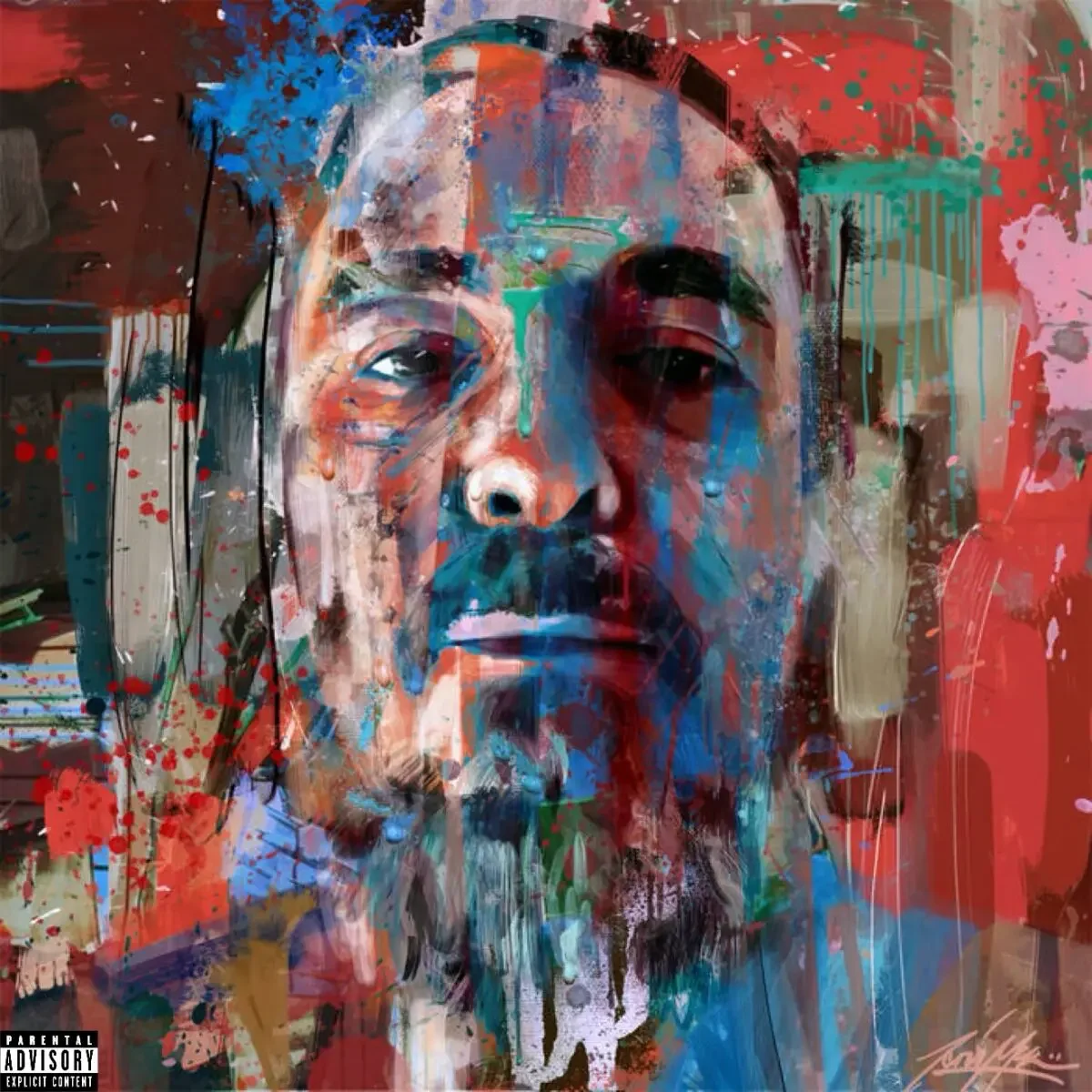
Farma G Returns
Before the language of British rap had fully settled into itself there were artists building something from the ground up with very little in the way of recognition or reward. Among them was Farma G, one half of Task Force, one of the most influential figures the culture has ever produced.
Task Force emerged in the 1990s through the kind of pirate radio networks that no longer exist, with dubplates, hand-to-hand tape circulation and no obvious channels to move through. At a time when British rap was still largely defined by American sounds Task Force made something distinctly rooted in their own environment with unfiltered accents, hyper-local references and an unpolished but deliberate tone. Rather than an attempt to replicate the American scene, this was the early formation of a new British one.
While Chester P occupied the more visible space, his brother Farma G’s presence as both a reflective rapper and a measured producer was essential, shaping the sonic identity of Task Force with dusty beats built from fragments of garage rock and 60s psychedelia from their parents’ record collection. Records like New Mic Order and Music From The Corner established a blueprint that would inform large parts of the UK underground in the years that followed without aligning to the dominant industry narratives of the moment.
Long after Task Force’s active years their influence can still be traced in the DNA of the scene. UK rap is now a global force, capable of filling arenas and dominating charts and the pathways to success are far more visible, but Farma G’s return challenges the assumption that visibility should be the primary measure of relevance, suggesting that influence can exist outside of constant exposure and proving that an artist can step back without losing their connection to the culture they helped build. Released in 2025, How to Kill a Butterfly arrived after a prolonged period in which Farma G had stepped away from being an active MC, and wasn’t a comeback in the conventional sense but an act of reassertion.
Nearly Nothing’s Enough is a continuation of the reawakening on How to Kill a Butterfly. Forever prioritising substance over noise, we caught up with the legendary Farma G to find out more:
When you listen back to Task Force now, what do you think has changed in the scene that you couldn’t have known at the time?
One of the things I could not have predicted, is the ease of access. The Internet was pretty new when Task Force first started making music and our music production, promotion and sales techniques et cetera were very typical of the times. Nowadays, people have studios on their ipads, digital distributors left, right and centre and social media at their fingertips. On face value this all seems very positive and beneficial for a budding musician or artist but the resounding reality is that the exposure and pressure to succeed on these young inexperienced artists can be overwhelming and highlight shortcomings, lack of knowledge and areas of development on a very public platform. You would be led to believe, that having a few thousand views on a video you posted on YouTube makes you a success. As a professional musician who has an extensive amount of experience, I still believe that real life interactions, gigging, cyphers etc are still the best foundation for any artist. Have fun, it’s not about numbers on a screen.
Were you consciously trying to define a distinctly British voice at the time, or did that just emerge naturally?
I was rapping and writing lyrics at the age of 11 years old. It was 1985 and I wanted to sound like Slick Rick or Kool Moe Dee, so I naturally imitated the voices I heard. As I got older, my elders introduced me to British hip-hop artists such as Demon boys, blade and London posse et cetera. I began to embrace my own natural dialect and colloquial accent. I think it is extremely important as a UK hip-hop artist to bring your own voice to the table and not just to imitate the sounds and styles from across the ocean.
Do you think UK hip-hop has lost anything now that it’s more commercially viable?
I think UK hip-hop has always been commercially viable and had moments in time where it topped the charts and was on everyone’s list of hip and happening things going on. The UK has typically always embraced novelty records across all genres, the British just love a novelty record. So every now and then you get someone sending up the image of hip-hop culture and making a quick buck off the casual music listener. Saying all of that, there have been plenty of UK hip-hop successes over the years from The Brotherhood to Roots Manuva but never anything that took someone to the level of pop stardom. UK rap on the other hand…
How has working more behind the scenes changed how you think about art?
Being behind the scenes and working with artists from both here and in the states, has given me an insight into how different the process of making music is, for each and every individual. The various approaches can differ so much, the care and time spent or lack of, are intriguing. I suppose that’s what art really is when you boil it down, It’s the attitude, personality, intention and delivery of the work itself that creates the art for us all to hear, feel and see.
If How to Kill a Butterfly represents the end of one era and the start of another, what were you leaving behind?
I believe one can re-create themselves and the way they think, over and over again, in fact, I feel that it is conducive to our growth as people to keep reevaluating and reinventing ourselves.
On a musical level, I was stepping out of one outfit and stepping into a new one like Mr Ben (old kids animation from the 70s that saw Mr Ben trying on outfits and transforming into whatever he wore…spaceman, cowboy etc)
Task Force has been and gone…so I wanted this new outfit I was trying on for the first time, to place me in the centre, face forward and head on.
On a more personal level, I have changed so much as a man in the last 10 years. I hardly recognise myself. I don’t drink, smoke or take drugs. My life is wholesome and family orientated. My wife, children and grandchildren are the most important thing to me. How to kill a butterfly was me saying goodbye to an older version of myself. Goodbye. Don’t come back!
What does the butterfly represent to you?
Rebirth
Do you feel a sense of pressure returning after a long gap?
To be honest, I never really felt like I had gone anywhere. I have always been here. I am like the Moss covered standing stones. Watching, silently, patiently ha ha ha. I suppose I put pressure on myself to be the best I can be but the pressure from any outside expectations can easily be diffused by not looking at the phone. I like to imagine the music scene I am a part of as being similar to a merry-go-round and as long as you are on it you will come back around into the light. I have personally gone full circle a good few times. Scream if you wanna go faster!!!!
Can you unpack the title and themes of the new record Nearly Nothing’s Enough?
I am someone who exists where having very little is almost always enough and somebody else may exist where no matter how much they have it’s never enough. I felt that the title could be applied to both of those situations. On this album I wrote most of the material with the idea of it being music from the corner, that dirty music. Psychedelic street poetry.
I tried to cover a variety of different feelings and moods some of which I felt deeply on a personal level. Others were ideas I wanted to have fun with.
Has your writing process changed over the years?
My writing is something that I believe is available to me whenever I want, something I can access at any time. When I was younger, I thought it had a limit, a timer and sometimes even a dependency on how I felt, what I’d smoked or how much I’d had to drink. I used to be worried about repeating the same patterns, topics and words. I worried so much that I gave up trying altogether. I had convinced myself that I was too old and my pen had died. I was wrong, the words flow abundantly and the ideas blossom and bloom without deliberation.
What do you hope people take from your music?
I want people to be able to relate to me, the same way they would with an actor playing a role. I am a made up character. Farma is my stage name and he does not exist outside of the world I have created for him. As Farma, I can explore worlds and ideas that don’t necessarily represent me in my day-to-day life but it is imperative for him to be able to extend his personality by taking on these shapes and forms. This may sound all a little strange but I have learnt that the two personalities (Farma and myself) have to be kept separate in order for them both to exist successfully.